
Beginner’s Guide to SEO
If you are new to digital marketing, understanding SEO is an important first step. This Beginner’s Guide to SEO explains the basics of search engine optimization and how it can help your website appear more prominently in search engine results. SEO helps businesses attract relevant visitors organically without relying entirely on paid advertising.
What Is SEO?
SEO, or Search Engine Optimization, is the process of improving a website so that search engines like Google can understand and rank its content. When people search for information, products, or services, search engines analyze many factors to determine which pages are most relevant to their queries.
A well-optimized website can attract more organic traffic, increase visibility, and provide a better experience for visitors.
Beginner’s Guide to SEO: Key Areas to Learn
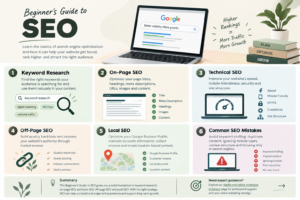
There are several important areas that beginners should understand when learning SEO.
1. Keyword Research
Keywords are words or phrases that people type into search engines. Keyword research helps you discover what your target audience is searching for. Choose relevant keywords that match your content and the needs of your audience.
Avoid using keywords excessively. Instead, include them naturally in your headings, paragraphs, page titles, and other relevant areas.
2. On-Page SEO
On-page SEO focuses on optimizing elements within your website. This includes page titles, headings, meta descriptions, URLs, images, and content.
Creating useful, original, and easy-to-read content is essential. Your content should answer the visitor’s question rather than being written only for search engines.
3. Technical SEO
Technical SEO involves improving the technical aspects of a website. Website speed, mobile responsiveness, secure HTTPS connections, crawlability, and a clear site structure can all contribute to a better search experience.
A technically healthy website makes it easier for search engines to discover and understand your pages.
4. Off-Page SEO
Off-page SEO refers to activities outside your website that can support its authority and visibility. One important area is earning backlinks from relevant and trustworthy websites.
Building quality backlinks should focus on useful content, relationships, and genuine value rather than using manipulative link-building methods.
5. Local SEO
For businesses serving a specific location, local SEO can be particularly useful. Optimizing your Google Business Profile, maintaining accurate business information, collecting genuine reviews, and creating location-relevant content can help improve local visibility.
Why Is SEO Important?
SEO can help businesses reach people who are actively searching for their products, services, or information. Unlike paid advertising, organic search traffic does not require paying for every individual click. However, SEO requires consistent effort, useful content, technical improvements, and ongoing monitoring.
Search engine algorithms also change over time, so businesses need to review their strategies and keep their websites useful and accessible.
Common SEO Mistakes to Avoid
Beginners often make mistakes such as keyword stuffing, copying content, ignoring mobile users, using unclear page structures, and focusing only on search engines instead of visitors.
The best approach is to create valuable content, use keywords naturally, maintain a technically sound website, and focus on providing a positive user experience.
